
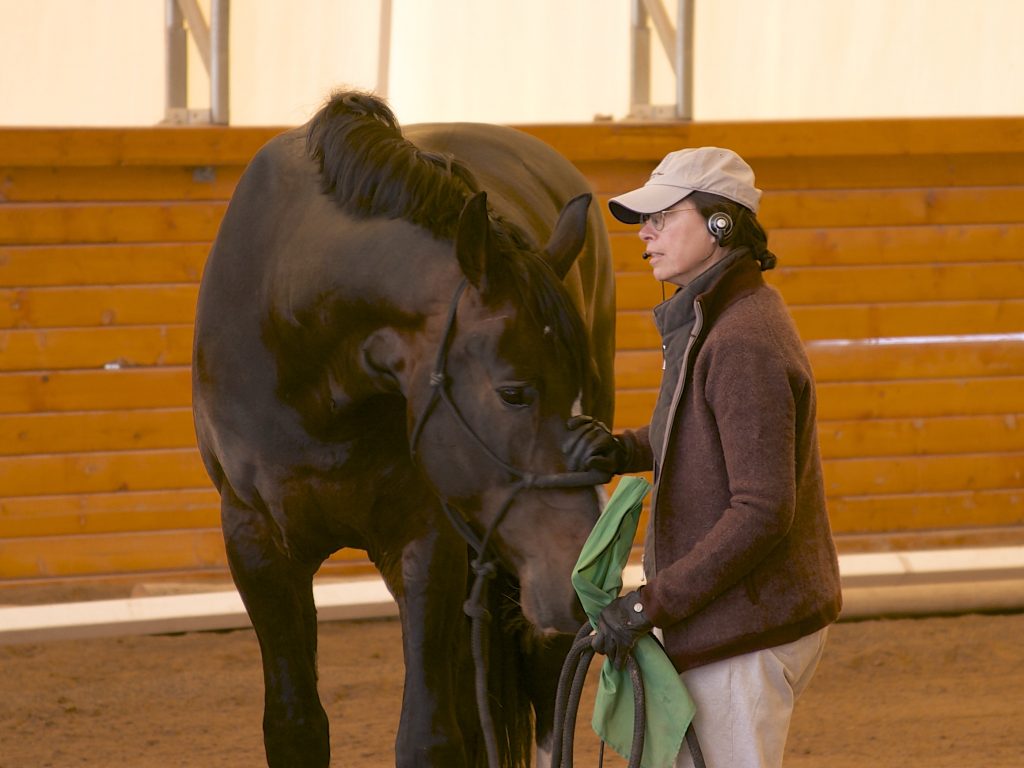
The Horse’s Inner Landscape
To guide a horse with grace, one must first learn to see the horse as a being shaped by physical, emotional, and spiritual patterns. The physical can be explained through anatomy and physiology of the horse: Equine Biomechanics. Equine biomechanics teaches us that every horse arrives with natural asymmetries, stiffness, and balance challenges. Example: Most horses are stiffer on one side and more supple on the other. This pattern is not a flaw, but a functional reality of how their bodies develop and compensate.
Yet biomechanics is only part of the story. Horses also carry emotional patterns shaped by their past experiences, their horsepersons, and their herd mates. A horse may brace not because their muscles are tight but because their heart is guarded. They may rush not because they are unbalanced but because they feel unseen or misunderstood.
Sacred horsemanship recognizes that the horse’s inner life is not separate from their physical movement. Their bodies and spirits speak through the same language. A lifted head may signal imbalance, tension, or uncertainty. A slow blink may signal surrender, softness, or relief. A shift in the ribcage or the breathing pattern may reveal more truth than any gait analysis.
To see the horse’s inner landscape, the EquiSeer listens with more than the eyes. The EquiSeer listens with presence. The EquiSeer sees with awareness. They interweave scientific knowledge, classical art, and sacred principles, allowing them to meet and inform one another.