
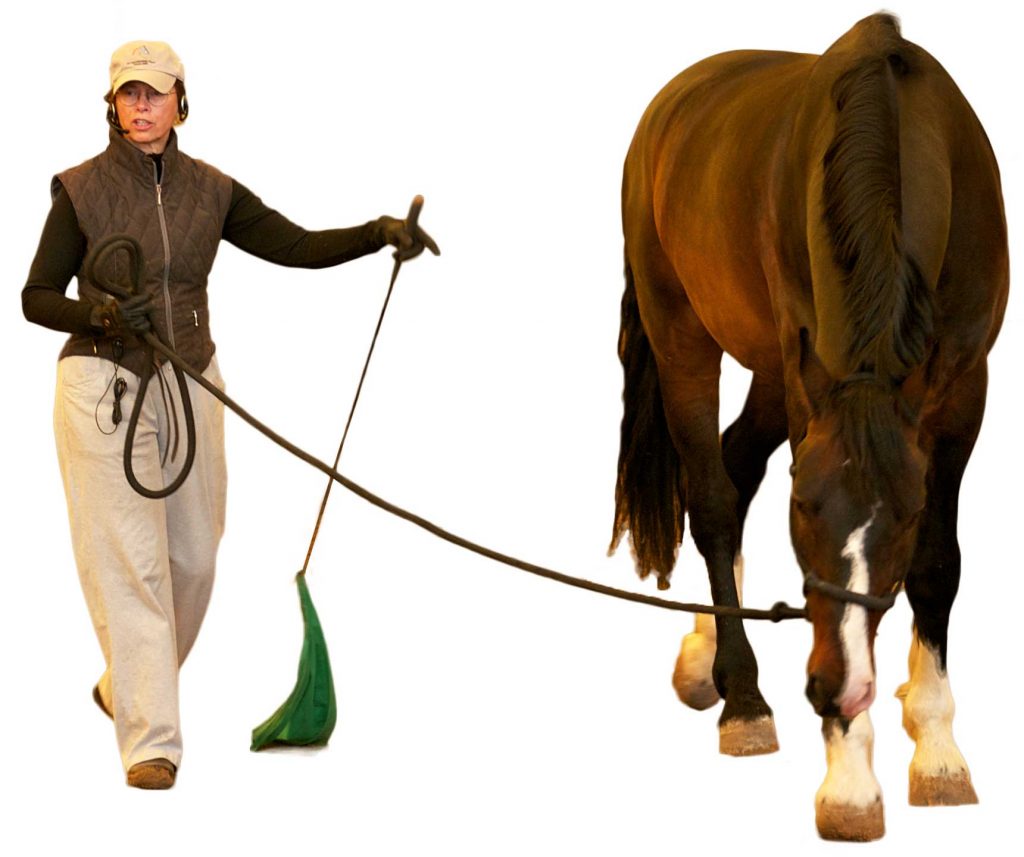
Preparatory Principles Before Movement
How Preparation Shapes Possibility
Before any movement is asked of the horse, groundwork invites both partners to prepare inwardly and outwardly.
The Horseperson’s Preparation: Importance of the Horsepersons Energy
CEA groundwork stresses the importance of the horseperson’s calm and focused energy. The horseperson must approach the horse with patience, clarity, and physical relaxation so the horse can relax with safety and trust from that presence. This principle forms the foundation for all later exercises . Groundwork becomes not merely training but co‑regulation. The horse’s nervous system responds to the horseperson’s, and the horseperson’s inner world becomes the grounding presence for the horse’s ability to soften, stretch, and engage.
The Horse’s Preparation
Knowledge and sacred presence meet in this space.
Horses need time to process, settle, and become mentally available. The sacred space of time allows the horse to stop, breathe, blink, chew, or yawn after each exercise. These behaviors reflect the horse’s natural processing and nervous system regulation. They signal that the horse is ready to move on.
Equipment
The rope halter, lunging cavesson, and flag each have specific roles. The rope halter allows clear communication. The cavesson supports bending and flexion from the poll. The flag extends the horseperson’s visual aids and spatial presence.
All of these are tools that become extensions of intention rather than instruments of control.
The Partnership Principle
Before movement, groundwork asks both partners to step into the shared field of presence. The horse’s inner world and the horseperson’s inner world must meet in balance. This meeting is the quiet doorway through which the EquiSeeker steps into the first stages of seeing.