
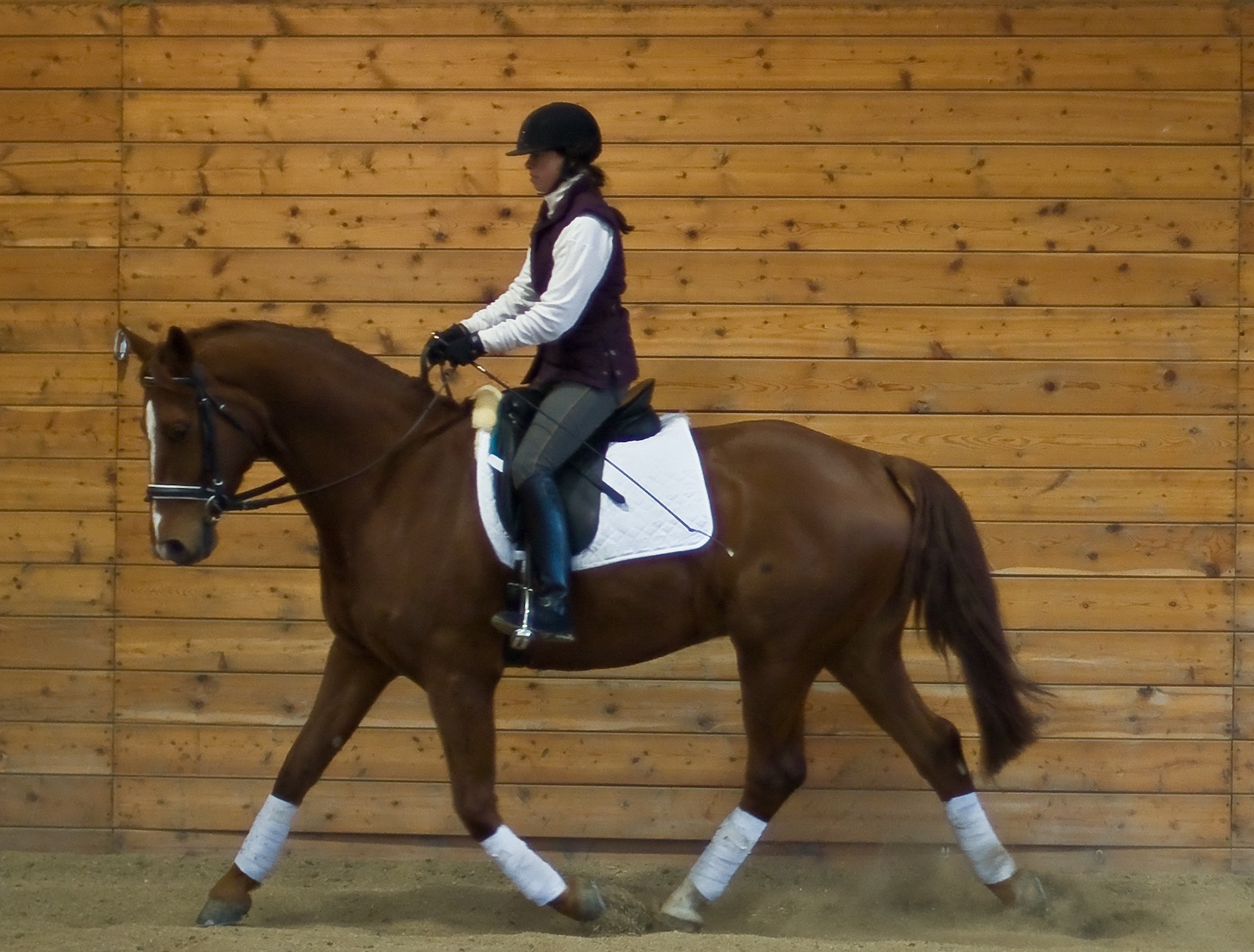
Classical Principles as a Living Language
Classical riding is not a rigid system, it is a living language that develops the horse’s body and mind through systematic, gymnastic work. The German National Equestrian Federation describes classical riding as both modern and rooted in enduring principles. Its purpose is to nurture the horse’s natural movement, teach balanced carriage, and preserve soundness through progressive conditioning.[4]
Several foundational ideas shape this path:
- The natural purity of the gaits is preserved. The walk remains a clear four beats, the trot moves in diagonal pairs, and the canter flows in a three-beat rhythm with suspension.[5]
- Training unfolds in a systematic progression, always seeking clarity, calmness, and gymnastic development rather than spectacle.[6]
- The horse and human grow together. The rider cultivates a balanced, independent seat, and the horse develops self-carriage and responsiveness.[7] [ISES_Train…n Pictures | PDF]
Within this living structure, the training scale serves as a map that orients both the beginner and the accomplished. Rhythm, relaxation or Losgelassenheit, contact, impulsion, straightness, and collection are not rigid steps. They describe qualities of movement and communication that develop and interact over time.[8]
When a master works, they no longer think of the training scale as a checklist. They feel it as a quiet conversation between bodies.